
Transitioning from Standalone EDR to Managed Detection and Response (MDR) for Michiana SMBs
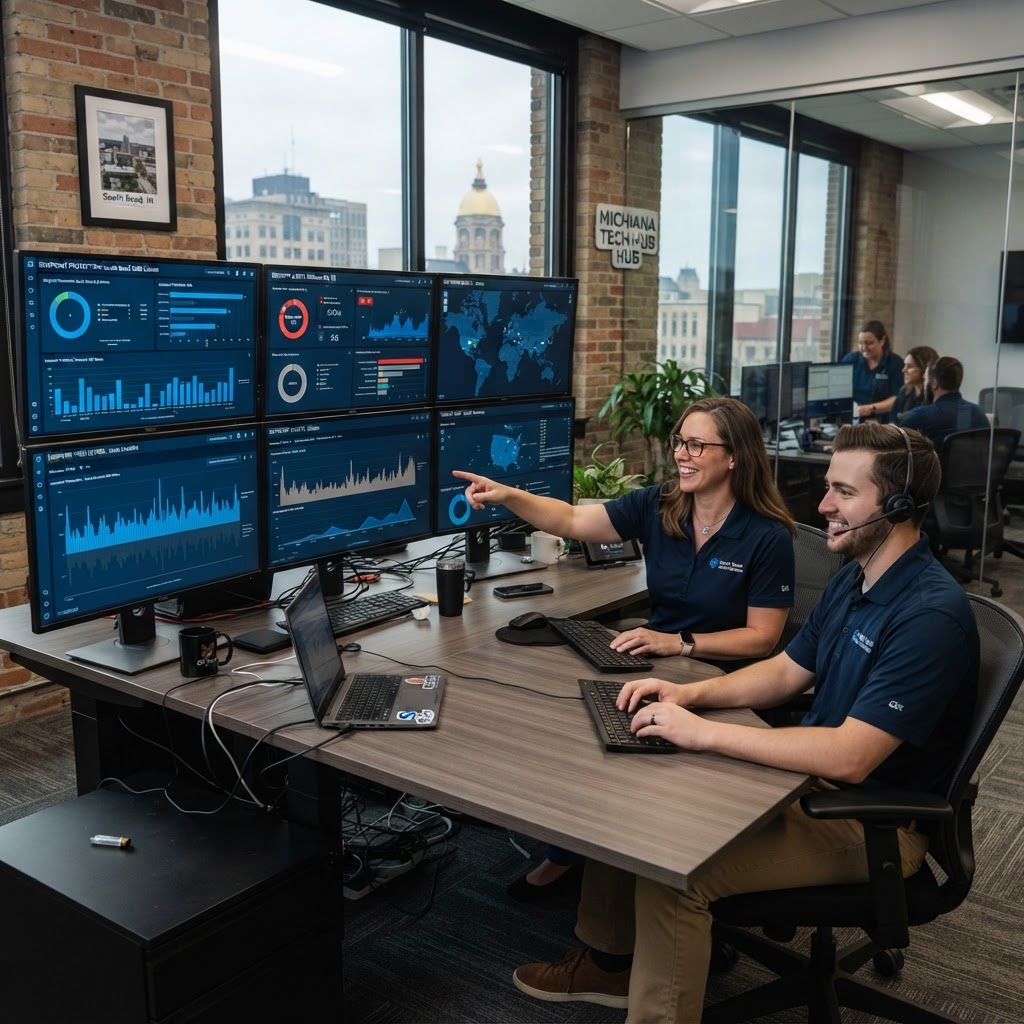
Why More Michiana SMBs Are Outgrowing Standalone EDR
For many small and midsize businesses in Michiana, endpoint detection and response (EDR) once felt like a major cybersecurity upgrade. It gave organizations better visibility into suspicious activity on laptops, desktops, and servers than traditional antivirus ever could. But in 2026, having an EDR tool installed is no longer the same as being protected.
That is the challenge many local businesses in South Bend and the surrounding Michiana region are facing. Cybercriminals are moving faster, ransomware attacks are more targeted, and cyber insurance carriers are raising the bar. If your internal IT team is already stretched thin, a standalone EDR platform can quickly become just another dashboard that no one has time to monitor.
Managed Detection and Response (MDR) changes that model. Instead of simply giving your business a tool, MDR provides the people, process, and 24/7 monitoring needed to detect, investigate, and contain threats before they become costly incidents. For understaffed SMBs, that difference is becoming critical.
Why Standalone EDR Is Falling Short for Understaffed Businesses
EDR is valuable, but it is only one part of an effective cybersecurity strategy. On its own, standalone EDR depends heavily on someone inside your business reviewing alerts, investigating suspicious behavior, and taking action quickly. That is where many SMBs run into trouble.
Most small businesses do not have a dedicated security operations center, overnight coverage, or in-house analysts trained to separate real threats from false positives. Even a capable internal IT generalist may be juggling help desk tickets, Microsoft 365 support, vendor management, backups, and network issues. Expecting that same person to actively monitor endpoint alerts around the clock is unrealistic.
This creates several common problems:
- Alert fatigue: EDR tools can generate a high volume of notifications, many of which require analysis.
- Slow response times: Threats that appear after hours or on weekends may sit unnoticed.
- Limited investigation capacity: Without security expertise, teams may miss signs of lateral movement, ransomware staging, or credential abuse.
- Compliance and insurance gaps: Simply owning an EDR platform may not satisfy evolving underwriting requirements.
For Michiana SMBs, the issue is not that EDR is bad. The issue is that endpoint detection and response without active management often leaves dangerous gaps.
How MDR Strengthens Endpoint Detection and Response
Managed Detection and Response builds on the strengths of EDR by adding experienced security analysts, threat hunting, triage, and guided or direct response. In practical terms, MDR helps ensure your endpoint security tools are actually being used effectively.
A strong MDR service typically includes:
- 24/7 monitoring of endpoint alerts and suspicious behavior
- Threat validation to reduce false alarms and focus on real incidents
- Rapid containment of compromised devices or user activity
- Expert investigation into how a threat started and whether it spread
- Actionable remediation guidance for your internal team
- Reporting support for leadership, compliance, and cyber insurance documentation
For a local manufacturer, medical practice, professional services firm, or nonprofit in South Bend, that support can be the difference between a contained security event and a business-disrupting ransomware incident.
MDR is especially useful when your business has remote workers, multiple locations, or a lean IT staff. It helps close the gap between owning a security tool and operating a real security function. Instead of relying on best-effort monitoring, you gain a team focused on detecting and responding to threats in real time.
Why 2026 Cyber Insurance Standards Are Pushing SMBs Toward MDR
Cyber insurance applications are becoming more detailed, and carriers increasingly want proof that controls are not only deployed but actively managed. For many businesses, standalone EDR is no longer enough to demonstrate a mature security posture.
By 2026, insurers are expected to look more closely at controls such as:
- Multi-factor authentication across key systems
- Endpoint detection and response coverage across all devices
- 24/7 threat monitoring and incident response readiness
- Privileged access controls
- Security awareness training
- Vulnerability management and patching discipline
- Backup and disaster recovery testing
This is where MDR becomes a strategic advantage. If your business can show that endpoint alerts are monitored continuously, incidents are investigated by security professionals, and response procedures are in place, you are in a much stronger position during underwriting and renewal discussions.
For SMBs in Michiana, rising insurance scrutiny can create a difficult choice: hire expensive internal security talent or partner with an MDR provider. For most organizations, MDR is the more practical and cost-effective path.
Practical Steps for Moving from EDR to MDR
If your business already has EDR in place, transitioning to Managed Detection and Response does not have to be complicated. Start with a realistic assessment of your current environment and internal capacity.
Here are a few practical next steps:
- Review your current EDR coverage. Make sure all endpoints are protected, including remote devices and servers.
- Assess who is monitoring alerts. If the answer is “whenever someone has time,” your business likely has exposure.
- Document your response process. Know who gets called, who isolates devices, and how incidents are escalated.
- Check your cyber insurance requirements. Compare your current controls to what carriers are asking for now and what they are likely to require next.
- Look for MDR with SMB-friendly support. Choose a provider that explains findings clearly, works well with your internal IT resources, and aligns services to your budget and risk profile.
The right MDR partner should not overwhelm your team with jargon or unnecessary complexity. They should help your business improve endpoint security, strengthen incident response, and make cybersecurity more manageable day to day.
If your organization in South Bend or the greater Michiana area is relying on standalone EDR and hoping someone will catch the next alert in time, it may be time for a better model. The K.A.B. Group helps SMBs evaluate cybersecurity gaps, improve endpoint detection and response, and transition to practical Managed Detection and Response solutions that support both operational resilience and cyber insurance readiness. If you are ready to strengthen your defenses without overloading your internal team, contact The K.A.B. Group to start the conversation.