
Smarter IT Growth for Michiana SMBs: Building a Co-Managed Strategy for 2026
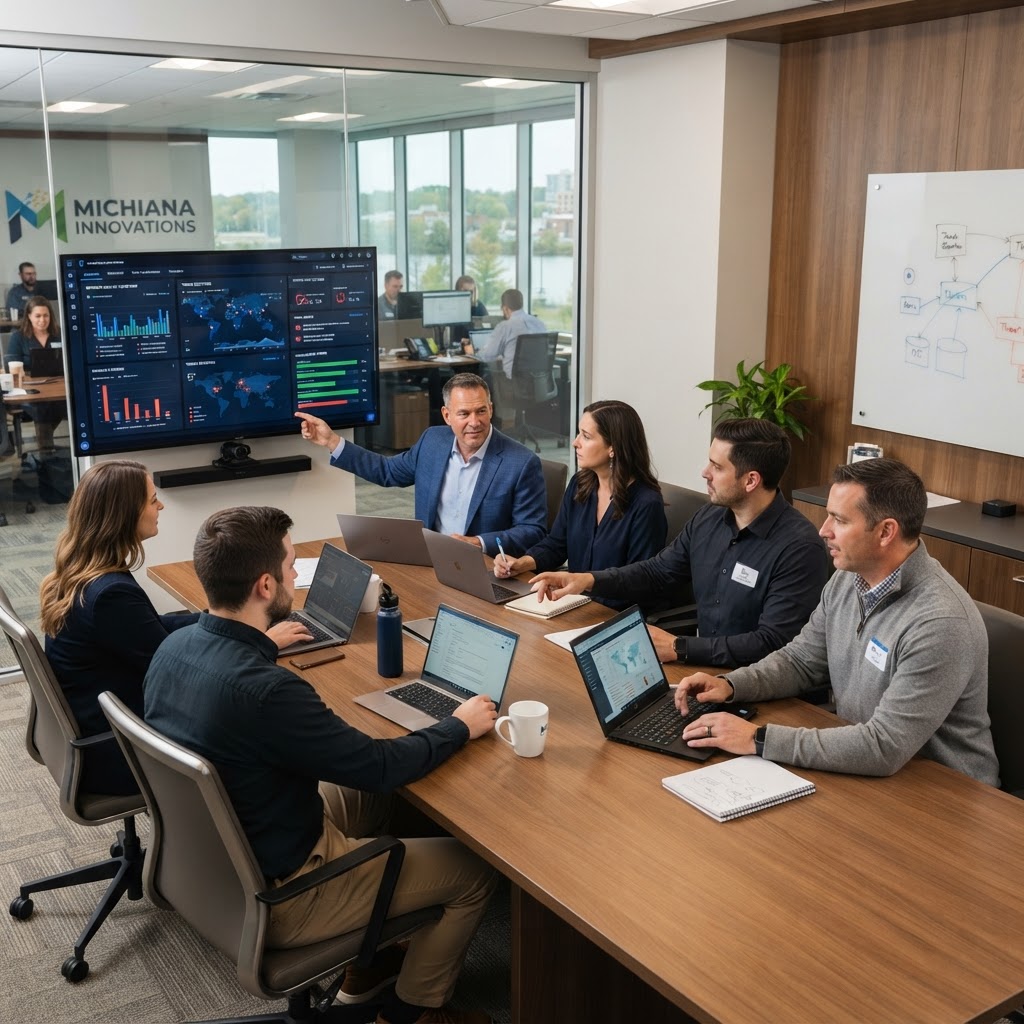
Why Michiana SMBs Are Rethinking IT Support
For many small and midsize businesses in Michiana, IT has become too important to treat as a back-office function. Between rising cybersecurity threats, tighter compliance expectations, and growing demands from employees and customers, internal IT teams are being asked to do more than ever. The challenge is that many SMBs in South Bend and the surrounding region do not need — or cannot justify — a fully staffed enterprise IT department.
That is where co-managed IT strategies make sense. Instead of replacing your in-house team, a co-managed model adds outside expertise, tools, and cybersecurity support where you need it most. This approach helps businesses scale IT operations without overextending budgets or burning out internal staff. As 2026 approaches and compliance requirements continue to evolve, co-managed IT services can give Michiana businesses a practical path to stronger performance and lower risk.
What Co-Managed IT Looks Like in Practice
Co-managed IT is a partnership between your internal IT staff and a managed IT services provider. Your team stays in control of daily priorities, business knowledge, and user relationships, while the outside partner fills in gaps with specialized support, monitoring, cybersecurity, and strategic guidance.
For example, your in-house team may handle employee onboarding, device setup, and day-to-day help desk requests. A co-managed IT provider can support advanced cybersecurity tools, endpoint monitoring, patch management, backup oversight, cloud administration, and after-hours response. This is especially valuable for SMBs that have one or two IT employees wearing multiple hats.
In Michiana, this model is appealing because many growing businesses are balancing expansion with cost control. Manufacturers, professional service firms, healthcare-related organizations, and local nonprofits often need stronger IT capabilities without taking on the full cost of additional full-time specialists. Co-managed cybersecurity can also help bridge expertise gaps in areas like phishing defense, access controls, incident response planning, and security awareness training.
The biggest advantage is flexibility. You can decide where your internal team leads and where your IT partner supports. That makes co-managed IT services a strong fit for businesses that want to improve resilience without giving up visibility or control.
How Co-Managed Cybersecurity Helps Meet 2026 Requirements
By 2026, SMBs will face more pressure to show that they are managing cyber risk proactively. Even if your business is not heavily regulated, clients, insurers, and business partners increasingly expect proof of security controls, documented processes, and reliable backup and recovery plans.
A co-managed IT strategy can help you prepare by strengthening the areas that are often hardest for internal teams to maintain consistently:
- 24/7 monitoring and threat detection to catch suspicious activity early
- Patch and vulnerability management to reduce exposure from outdated systems
- Multi-factor authentication and identity controls to limit unauthorized access
- Security awareness training to reduce employee-driven risk
- Backup and disaster recovery planning to improve business continuity
- Documentation and reporting to support audits, cyber insurance, and customer requirements
For many SMBs in South Bend and across Michiana, compliance is no longer just about checking a box. It is about proving that your business can protect sensitive data and keep operating during disruptions. A co-managed cybersecurity approach gives internal IT teams help with the repetitive, time-sensitive, and highly specialized work that often gets delayed when day-to-day issues take priority.
If your business works with healthcare data, financial information, legal records, or supply chain systems, now is a smart time to review your controls. Waiting until a client questionnaire, audit, or insurance renewal exposes a gap can be far more expensive than addressing it proactively.
How to Build the Right Co-Managed IT Strategy
The most effective co-managed IT strategies start with clarity. Before choosing a partner, identify what your internal team does well, where they are stretched thin, and which business risks matter most.
Start with a simple assessment:
- List your current IT responsibilities. Separate daily support tasks from strategic work and security responsibilities.
- Identify skill or coverage gaps. Look closely at after-hours support, cloud security, compliance reporting, and incident response.
- Review your current tools. Make sure monitoring, backups, endpoint protection, and access controls are aligned with current business needs.
- Set shared roles and expectations. Define who owns what so your internal team and outside provider can work efficiently together.
- Prioritize measurable outcomes. Focus on goals like reduced downtime, faster response times, stronger compliance readiness, and improved user support.
It is also important to choose a provider that will collaborate well with your staff. The best co-managed IT services are not about taking over. They are about giving your internal team the support, visibility, and specialized expertise they need to operate more effectively.
For SMBs in Michiana, local understanding can make a difference. A partner familiar with the business environment in South Bend and the surrounding area may better understand regional industries, staffing realities, and the importance of responsive service.
Signs Your SMB Is Ready for a Co-Managed Model
Not every business needs the same level of support, but several signs indicate that co-managed IT could be the right next step.
You may be ready if:
- Your internal IT staff is constantly stuck in reactive mode
- Cybersecurity projects keep getting postponed
- Compliance requests are becoming more frequent or more complex
- Your team lacks after-hours monitoring or incident response support
- Business growth is outpacing your current IT capacity
- Leadership wants better reporting, planning, and risk visibility
A co-managed model can help your business move from short-term problem solving to a more strategic IT posture. Instead of asking your internal team to do everything, you give them the resources to focus on higher-value work while experienced specialists support the rest.
For businesses planning for 2026, that balance can be a major advantage. It improves operational stability, supports compliance efforts, and helps protect the business from fast-changing cyber threats.
If your company is evaluating co-managed IT strategies for SMBs in Michiana, The K.A.B. Group can help you find the right balance between in-house IT and expert outside support. Our team works with businesses across the South Bend region to strengthen cybersecurity, improve daily IT operations, and prepare for what comes next. Contact The K.A.B. Group to discuss a co-managed IT approach built around your goals.