Remote and Hybrid Work Productivity: How SMBs Can Reduce Meeting Fatigue With an Asynchronous-First Communication Stack
Why Meeting Fatigue Is Hurting Remote and Hybrid Work Productivity
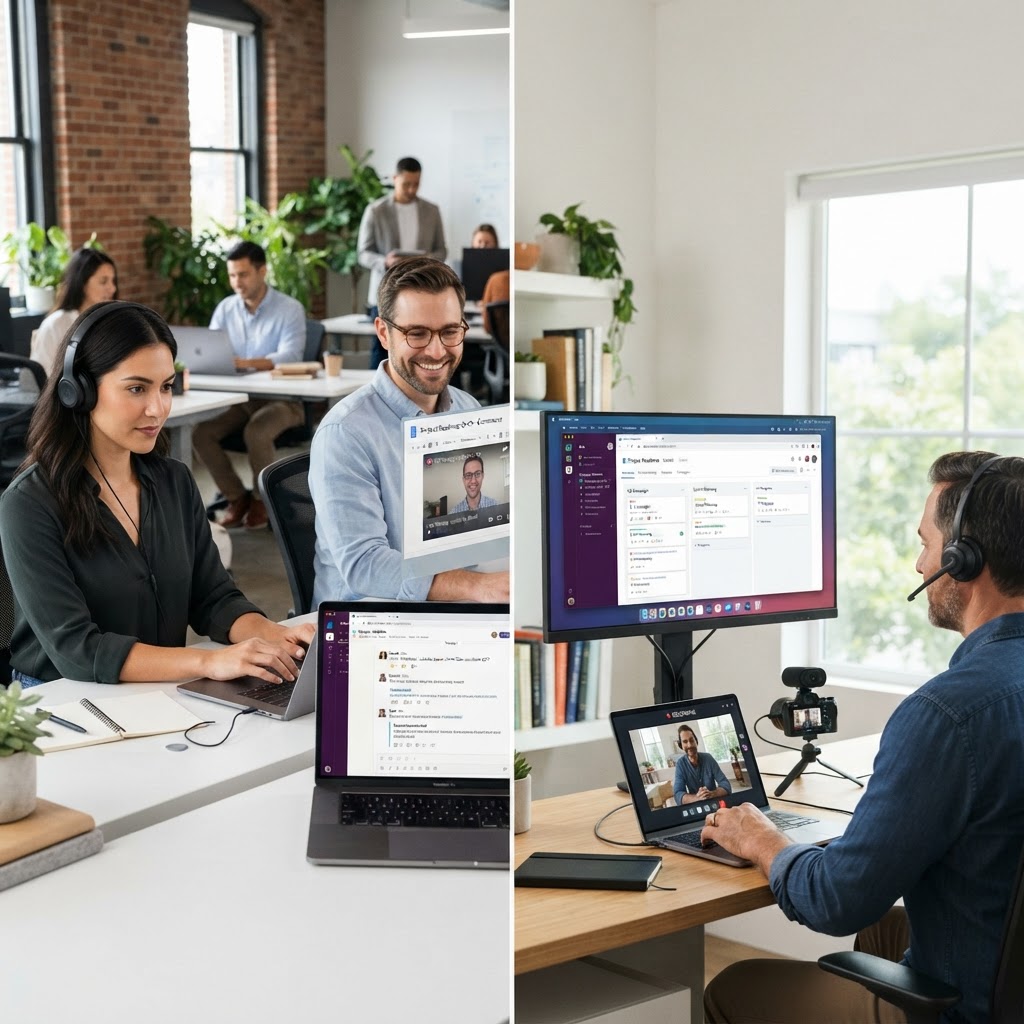
For many small and midsize businesses, remote and hybrid work promised flexibility, better work-life balance, and access to a wider talent pool. But in practice, many teams have replaced hallway interruptions with back-to-back video calls. The result is meeting fatigue, slower decision-making, and less time for focused work.
Improving remote and hybrid work productivity does not mean eliminating collaboration. It means being more intentional about how communication happens. An asynchronous-first communication stack helps SMBs reduce unnecessary meetings by shifting routine updates, status checks, and project discussions into tools that do not require everyone to be online at the same time.
When teams use the right remote and hybrid work tools, employees gain more control over their schedules, managers get clearer visibility into work, and the business spends less time in meetings that could have been messages, recorded updates, or shared documents.
What an Asynchronous-First Communication Stack Looks Like
An asynchronous-first approach means defaulting to communication methods that allow people to respond on their own time, while still preserving synchronous tools for urgent issues, relationship-building, and complex discussions. For SMBs, this does not require a massive technology overhaul. In most cases, it means using existing productivity tools more strategically.
A practical asynchronous-first communication stack often includes:
- Team chat tools for quick updates, lightweight questions, and organized channels by project or department
- Project management platforms for assigning tasks, tracking deadlines, and reducing status meetings
- Shared documentation systems for process notes, decisions, and internal knowledge
- Recorded video or voice updates for context-rich communication without scheduling a live meeting
- Email for formal external communication and non-urgent updates
- Video conferencing reserved for high-value conversations that benefit from real-time interaction
The goal is not to add more apps. It is to define the purpose of each tool so employees know where to communicate, where to find information, and when a meeting is actually necessary. This structure is one of the most effective ways to support hybrid work productivity without creating confusion.
How SMBs Can Replace Unnecessary Meetings With Better Workflows
The fastest way to reduce meeting fatigue is to identify which meetings are happening out of habit rather than necessity. Weekly status calls, recurring check-ins, and update meetings are often the first candidates for change.
Start by replacing live status meetings with written updates in a shared project management tool. Team members can post progress, blockers, and next steps before a deadline each week. Managers still get visibility, but employees avoid losing large blocks of time to routine calls.
For more detailed updates, recorded video messages can be especially effective. A department lead can share a five-minute walkthrough with context, visuals, and action items, while team members watch when their schedules allow. This is often more efficient than trying to coordinate calendars across remote and hybrid teams.
You can also create simple communication rules such as:
- If an update does not require immediate discussion, post it asynchronously
- If a question can be answered in a shared document, add it there
- If a topic needs a decision, outline the options in writing before scheduling a call
- If a meeting is necessary, set a clear agenda and expected outcome
These small workflow changes improve remote work productivity by protecting focus time and making collaboration more predictable.
Choosing the Right Remote and Hybrid Work Tools for Your Team
The best remote and hybrid work tools are the ones your team will consistently use. SMBs do not need the most complex platform. They need a communication stack that is easy to manage, secure, and aligned with daily work.
When evaluating tools, focus on a few practical questions:
- Does the tool reduce friction or create another place employees have to check?
- Does it integrate with your existing systems?
- Can it support both remote and in-office employees equally well?
- Is it easy to search, organize, and revisit information later?
- Does it offer the security and administrative controls your business needs?
A strong stack often includes a messaging platform like Microsoft Teams or Slack, a project management tool like Asana, Trello, or ClickUp, and a documentation hub such as SharePoint, Google Workspace, or Notion. For many SMBs, the biggest productivity gain comes not from the specific brand of software, but from setting expectations around usage.
For example, if project decisions are documented in one central location, employees spend less time searching through email threads or asking for repeated updates. If chat channels are clearly organized, fewer conversations spill into unnecessary calls. Tool clarity supports both remote team productivity and accountability.
Building an Asynchronous Culture That Actually Works
Technology alone will not solve meeting fatigue. To make an asynchronous-first model successful, SMBs need clear norms and leadership support.
Begin by documenting communication expectations. Define response time guidelines for chat, email, and project comments so employees do not feel pressure to be constantly available. Encourage managers to model healthy behavior by using asynchronous updates themselves instead of defaulting to meetings.
It also helps to train teams on when to escalate to live conversation. Not every issue should stay in chat or comments forever. Sensitive feedback, conflict resolution, and time-critical decisions still benefit from real-time discussion. The key is making meetings purposeful rather than automatic.
Finally, review results regularly. Track metrics such as time spent in meetings, project turnaround times, employee feedback, and missed handoffs. Many SMBs find that when they reduce meeting overload, they also improve clarity, documentation, and cross-team collaboration.
An asynchronous-first communication stack is ultimately about giving people the information they need without interrupting their ability to do meaningful work. That is a smarter, more sustainable approach to remote and hybrid work productivity.
If your business wants to improve collaboration, streamline communication, and get more value from its technology, The K.A.B. Group can help. Our team works with SMBs to align IT, productivity tools, and business processes so remote and hybrid teams can work more efficiently with less meeting fatigue.