
Predictive Maintenance for SMB Manufacturers: Retrofit Legacy Equipment with Affordable Cloud AI
Why Predictive Maintenance Matters for SMB Manufacturers
For small-to-medium manufacturers, unplanned downtime is more than an inconvenience — it can quickly become a major threat to profitability, delivery timelines, and customer trust. Many SMBs still rely on legacy equipment that gets the job done, but these machines often lack the built-in monitoring tools found in newer systems. The good news is that predictive maintenance for manufacturers no longer requires a massive capital investment or a complete equipment replacement.
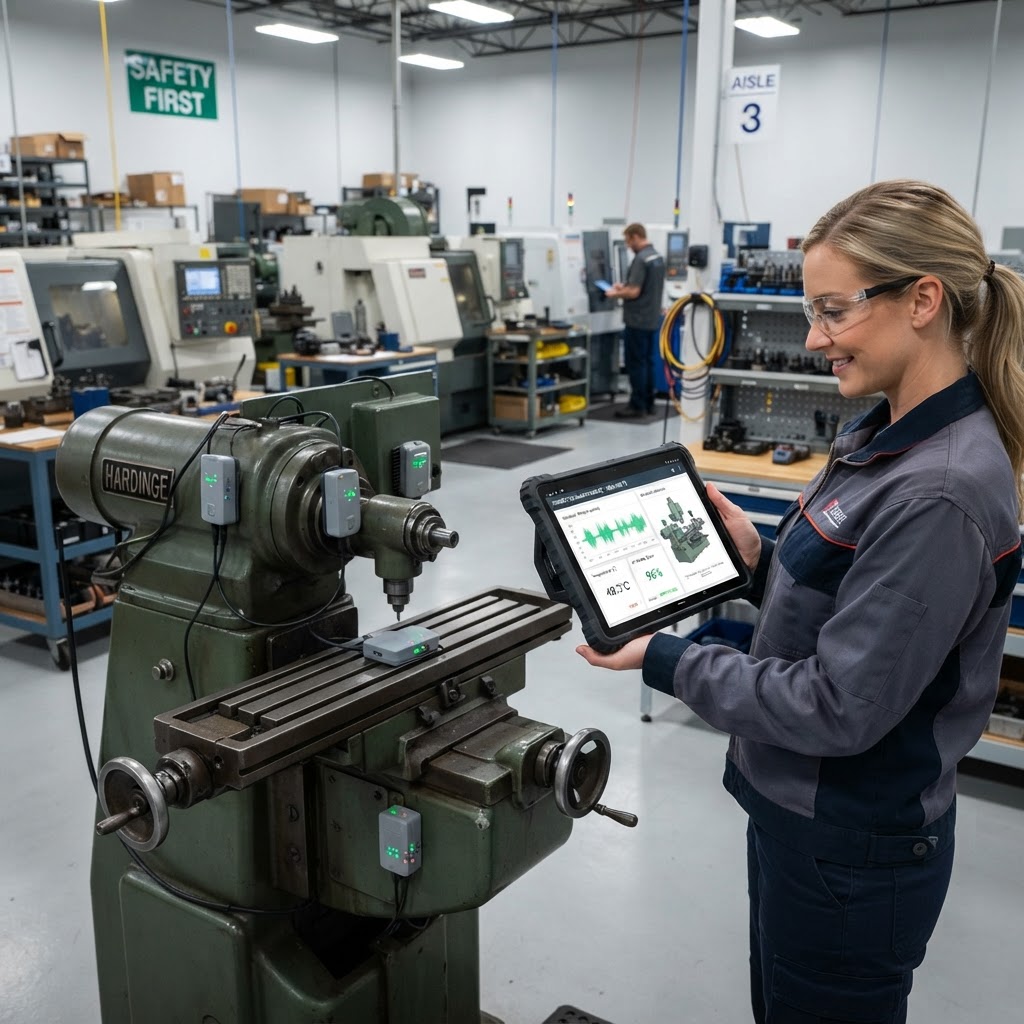
With affordable, cloud-based AI sensors, SMB manufacturers can retrofit existing machines, monitor performance in real time, and catch early warning signs before a breakdown disrupts production. This approach helps eliminate bottlenecks, reduce maintenance guesswork, and improve uptime without overcomplicating daily operations. For manufacturers looking for fast, measurable gains, predictive maintenance can often deliver a clear return on investment in under six months.
How AI Sensors Modernize Legacy Equipment Without Replacing It
One of the biggest misconceptions about AI in manufacturing is that it only works with brand-new, highly connected machinery. In reality, many predictive maintenance solutions are designed specifically to work with legacy equipment. Wireless sensors can be attached to motors, pumps, conveyors, compressors, CNC machines, and other critical assets to capture data such as vibration, temperature, power draw, and runtime.
That data is sent to a secure cloud platform, where AI tools analyze patterns and identify abnormal behavior. Instead of waiting for a machine to fail or relying only on a calendar-based maintenance schedule, your team gets alerts when equipment starts showing signs of wear. For example, a rising vibration trend might indicate bearing issues, while a temperature spike could point to lubrication problems or motor stress.
This kind of cloud-based predictive maintenance is especially valuable for SMB manufacturers because it is scalable and cost-effective. You can start with a small number of high-priority machines rather than instrumenting the entire plant at once. That keeps upfront costs manageable while still giving your team actionable insights almost immediately.
Where to Start: Focus on Bottlenecks and High-Cost Downtime
The best predictive maintenance programs do not begin with every machine on the floor. They begin with the assets that have the greatest impact on throughput, quality, or downtime costs. If one aging press, packaging line, or compressor can slow or stop production, that machine should be first on your list.
Start by asking a few practical questions:
- Which machines fail most often?
- Which asset creates the biggest production bottleneck?
- Where does unplanned downtime lead to missed shipments or overtime?
- Which equipment is expensive or difficult to repair quickly?
Once you identify those critical assets, install sensors that match the most likely failure modes. Vibration monitoring is often a strong first step for rotating equipment. Temperature sensors can help with motors, electrical panels, and bearings. Power monitoring can uncover irregular loads, inefficient operation, or warning signs of mechanical stress.
For SMB manufacturers, this targeted approach makes it easier to prove ROI. If one prevented breakdown avoids a day of lost production, emergency repair fees, and expedited shipping costs, the project can often pay for itself much faster than expected.
How to Prove ROI in Under Six Months
A successful predictive maintenance rollout should be measured with simple business outcomes, not just technical data. Before implementation, document a baseline for key metrics such as unplanned downtime hours, maintenance labor, scrap caused by equipment instability, and average repair costs. Then compare performance after the sensors and AI monitoring platform are in place.
Look for improvements in areas like:
- Reduced unplanned downtime
- Fewer emergency maintenance calls
- Better production throughput
- Longer equipment life
- Lower scrap and rework rates
- More predictable maintenance scheduling
For example, if AI sensors detect an airflow or bearing issue before a machine fails, your team can plan a repair during scheduled downtime instead of losing an entire shift to an unexpected outage. That one intervention can create measurable savings right away.
It is also important to choose a solution that is easy for your maintenance and operations teams to use. Dashboards should be clear, alerts should be actionable, and reporting should help leadership connect maintenance improvements to financial results. For many SMBs, the fastest wins come from a pilot program on just a few critical machines, followed by expansion once results are proven.
Best Practices for a Practical SMB Rollout
To get the most from predictive maintenance for manufacturers, keep the process simple and focused. Begin with a pilot on a narrow set of assets. Work with a technology partner who understands both IT and operations, so sensor data can be integrated securely into your environment without creating unnecessary complexity.
It is also smart to define responsibilities early. Decide who receives alerts, who validates equipment conditions, and how maintenance actions will be documented. Even affordable AI tools are only effective when teams know how to respond.
Finally, treat predictive maintenance as part of a broader digital improvement strategy. Cloud-based monitoring can support better planning, stronger cybersecurity awareness, and smarter capital decisions over time. When you can see which machines are becoming costly risks and which are still performing well, you can make more informed choices about repairs, upgrades, and replacements.
If your business is ready to reduce downtime, remove production bottlenecks, and modernize legacy equipment without overspending, The K.A.B. Group can help. Our team works with SMB manufacturers to implement practical, secure technology solutions that deliver real operational value. Contact The K.A.B. Group to explore how predictive maintenance and cloud-based AI tools can support your manufacturing goals.